
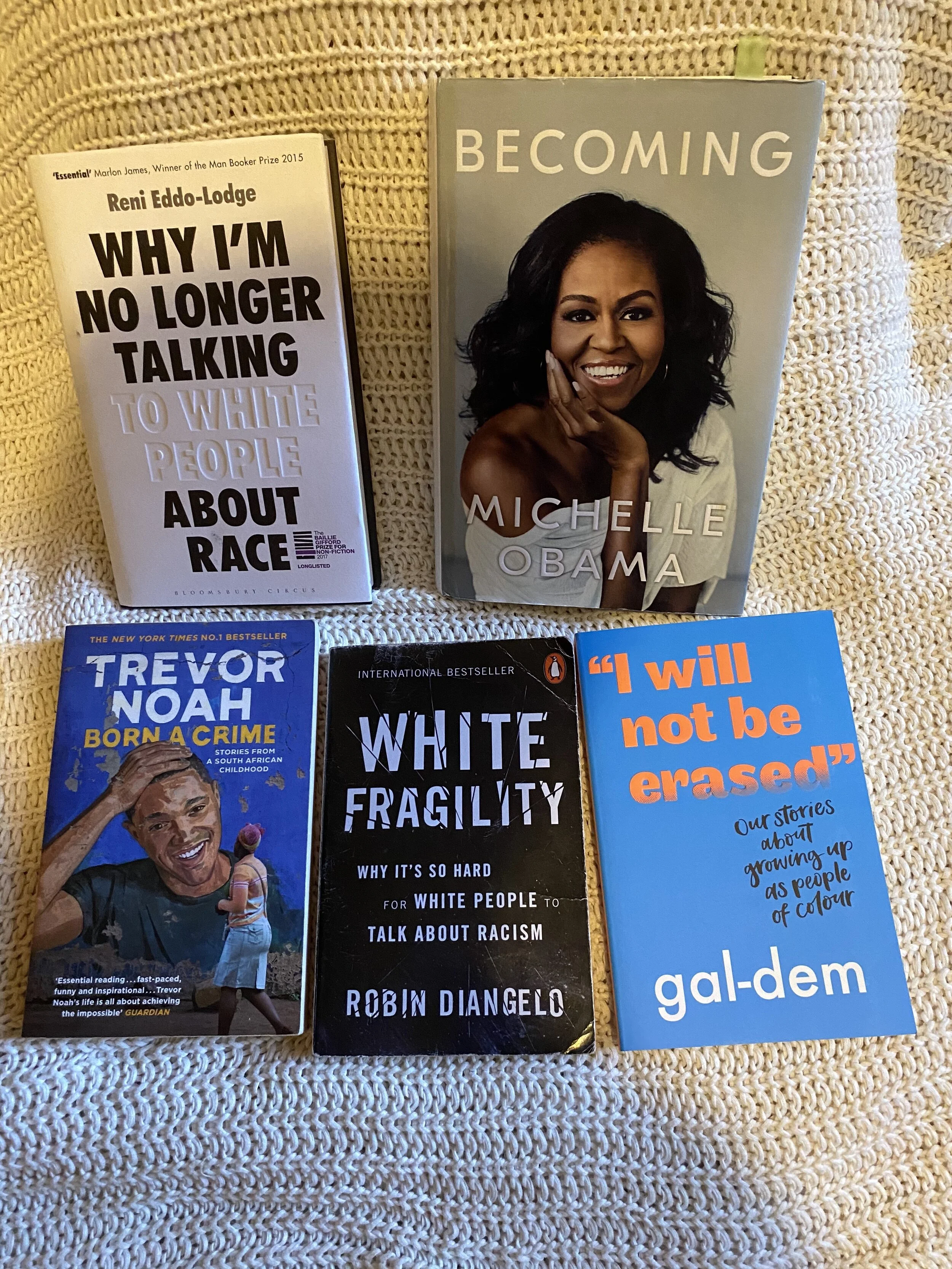
5 Non-Fiction Books that school you on race and racism
People have been writing about race and racism for years, so even if you’re new to the discussion these 5 non-fiction titles will school you all the way. I’ve gone with a nice mixture because I know there are ‘different strokes for different folk’.
These non-fiction books school you on race and racism all the way. I’ve gone with a nice mixture because I know there are ‘different strokes for different folk’. I’m a sucker for killing random sayings. Point being people have been writing about race and racism for years. The latest BLM movement that re-ignited after the killing of George Floyd has had some thinking that race and racism just appeared in 2020 and that every Black person is ready with open ears to these discussions or to answer questions. We’re not! But here’s a good middle ground. p.S: “No Karen, this isn’t new.”

By Trevor Noah
Book: Born A Crime
Publisher: John Murray
Released : 2017
If comedy and satire is your thing then Trevor Noah’s Born A Crime is your ideal book. In England he is mix-raced, in America he’s Black, and in South Africa he is mixed or coloured. I hate that term but we move! Born in 1984’s South Africa, his being was illegal according to Apartheid law. The whole book covers his experiences throughout his childhood. One incident in particular addresses the fact that he wasn’t able to be out in public with his mum growing up, or his dad for that matter. His mum hired a coloured woman to walk to the park and places with him, and she would walk behind pretending to work for the woman.
The book is filled with humour and had real roll on the floor choking in laughter moments, especially with the detailed stories of his ever growing mischief but race is at the core of the book.
“Where most children are proof of their parents’ love, I was the proof of their criminality”

By Michelle Obama
Publisher: Viking, Penguin Books
Released : 2018
If you’re looking for an autobiography from a famous/ public figure then Becoming by Michelle Obama is they key! Yes you hear about politics and some fluffy moments but Michelle Obama knows that she is a black woman and she's been very clear throughout the book. The memoir documents her experiences coming from Chicago, USA and how microaggressions affected her growning up. She covers imposter syndrome and how she noticed White flight before her eyes as her area went from diverse to grouped radically. As well as the treatment she received by the media during Barack Obama’s presidential campaign. The book is empowering as she highlights not just the struggles and discomfort of navigating white spaces but how to thrive and give back to the community. She is a very hyper aware of who she is and what she brings to the table. Full review available here
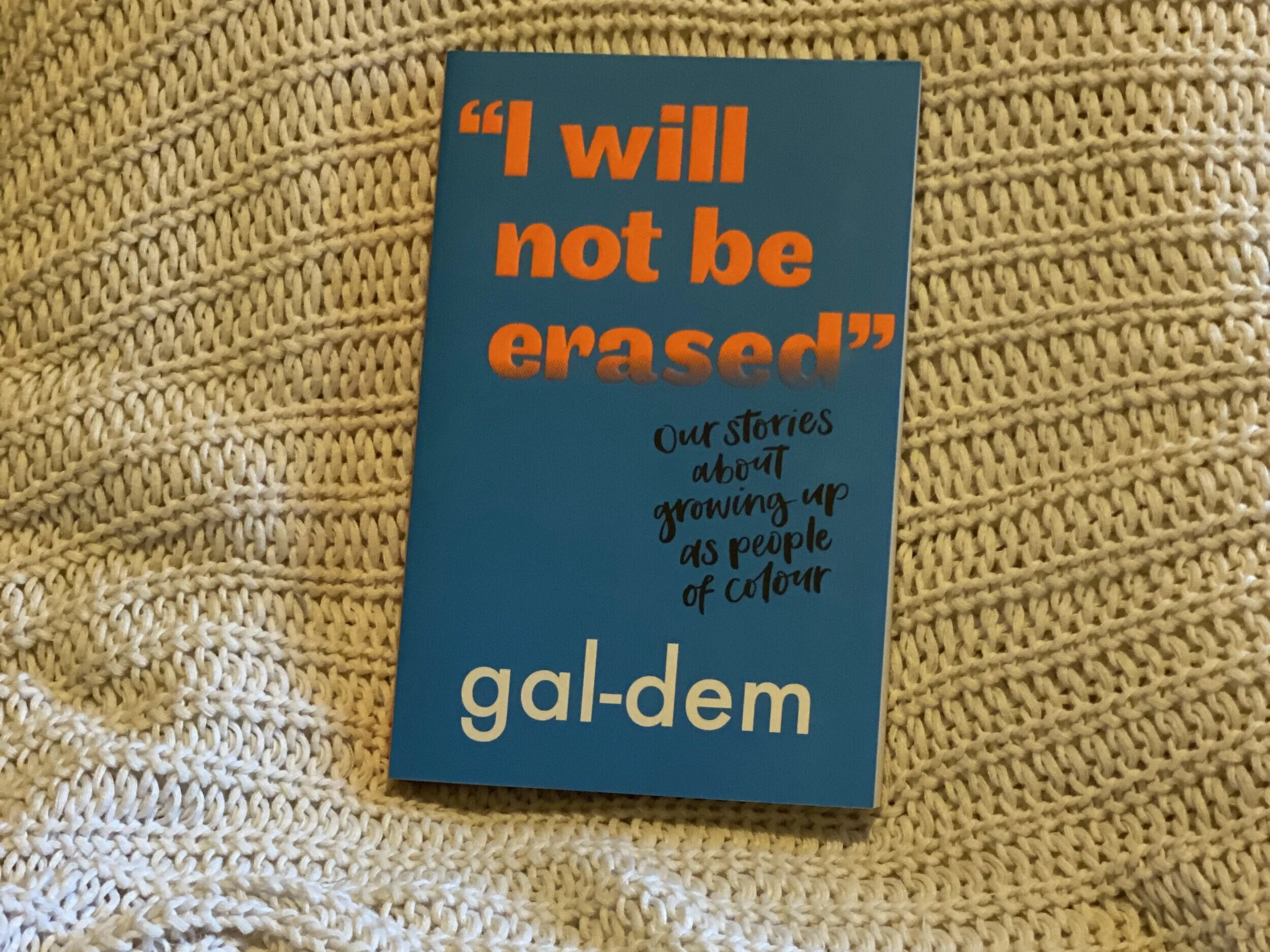
By gal-dem
Publisher: Walkers Books
Released: 2018
If you’re looking for young people sharing their truth then this book by gal-dem is for you. 14 very different stories covering a range of topics detailing how they’ve grown up. You discover first hand experiences of sexuality, family life, love, identity and navigating life in the UK as a person of colour. What separates this book from others is that the contributors were not afraid to venture into typically "taboo" subjects. A real testament to breaking barriers and encouraging others to speak their truth even if it makes others uncomfortable.
Full review available here

By Robin Diangelo
Publisher: Allen Lane, Penguin Books
Released: 2019
If you are white and need to have your ego shattered by a white woman then I recommend White Fragility why it's so hard for white people to talk about racism this is by Robin D'Angelo. Equally, if you are not-white and want to learn more about race from a white person’s perspective it’s a good read. I don’t go out of my way to recommend White authors, on issues like racism I think it’s very important to understand it from someone's lived experience, however she has done a PhD and she has been giving training on diversity and inclusion for years. FYI she’s highly qualified and not blind to her own privileges. Full review here

By Reni Eddo-Lodge
Publisher: Bloomsbury
Released: 2017
If you are looking for an exploration through a very aware and educated perspective through a Black British channel then Rennie Eddo-Lodge’s Why I’m No Longer Talking To White People About Race is your book. The book was born after a post she released went viral. She speaks from the heart but also backs up her views with litertaure and incidents that cannot be argued on. On top of that she has provided readers with notes and bibliography to signpost you to research deeper. It’s been called one of the most important books of 2017 and it's not hard to understand why.


Becoming
Honestly, I tried so hard to stay level headed but the more I read the more I got lost in the sauce. By chapter 2 I was captivated by the autobiography. Michelle’s story isn’t an “I was saved and luck put me on” type of autobiography.
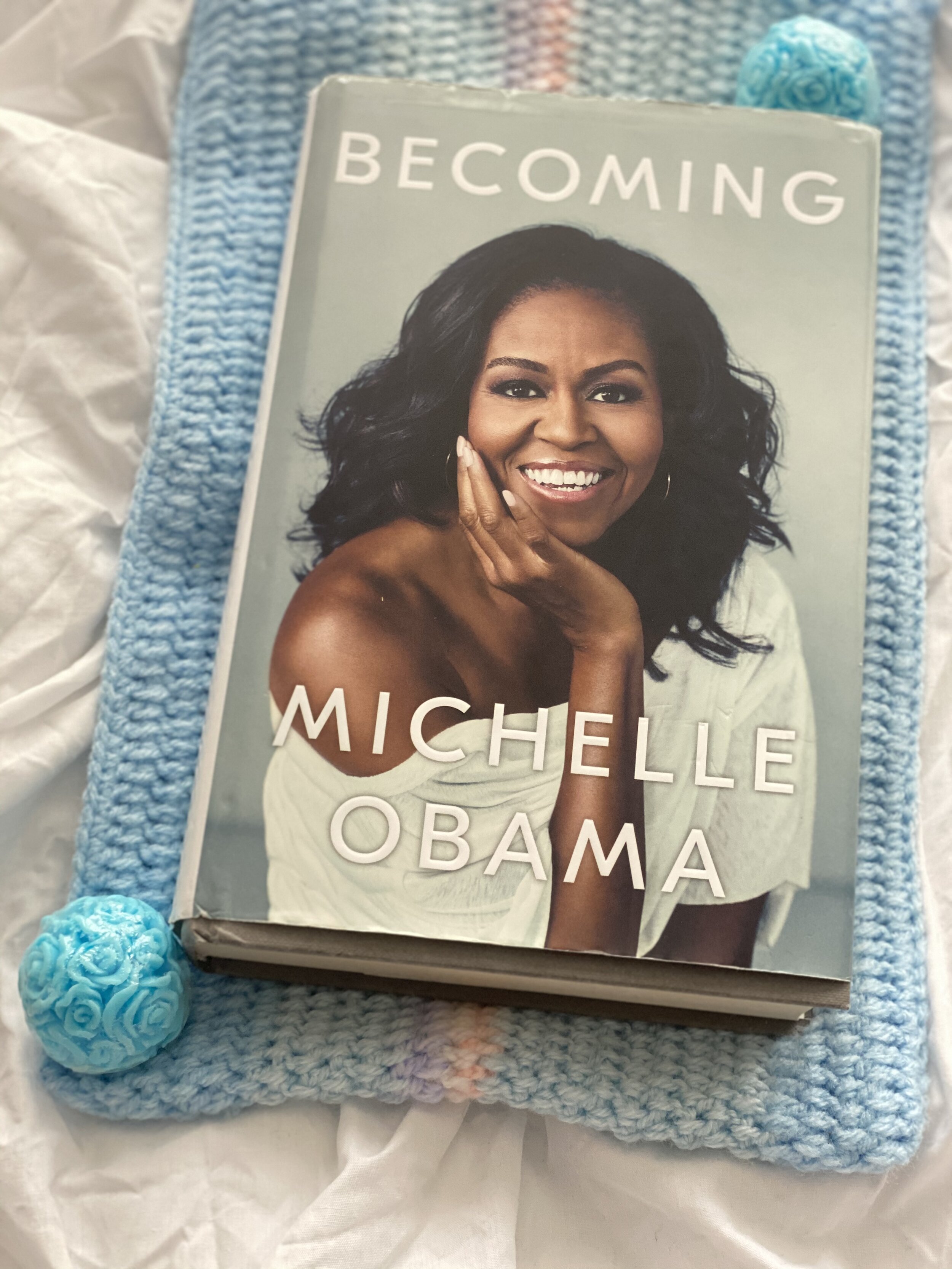
Michelle Obama
Genre: Autobiography
Publisher: Viking
The Truth, and nothing but the truth
All I knew about Michelle Obama when I picked up the book was that she was the wife of Barack Obama, the first Black President of the United States. The end. I had no interest or knowledge of her as an individual but knew that everyone seemed to be really hyped over this woman. I was indifferent but in the back of mind thought it could all be overrated, like I’ve found other gassed up books. I’ve also read complaints online that people have rated this book 5* because of who Michelle is, rather than her book being able to stand on her own. I’m not American, or majorly in politics. Yes I’m Black and I’d be lying if I said having Barack Obama in his position didn’t ignite black pride, but Michelle’s book hasn’t got an automatic 5*… Nah you got to earn this All-Purpose Seasoning stamp! I had the book on my bookshelf for well over 2 years before deciding to read it. Fast forward to Rona season, May 2020 and like many I found myself with more time on my hands so I reached for the book. Totally coincidental that Netflix announced Michelle Obama’s documentary was coming out whilst I was reading her book.
The breakdown
Becoming is Michelle Obama’s autobiography. It’s all about the life of Michelle Robinson who was born and raised in South Side Chicago. Raised in an apartment, above her Great Aunt who taught piano lessons, with her parents and older brother. Michelle opens up her life, with even the smallest details from her childhood, her family members teachings and her journey to university and further. The most famous further being from 2009-2017 when she was the First Lady of the United States. Michelle paints her story in her own words and colourful it is. Including her heartbreak- the death of her father who had MS but kept on going right to the very end. And her career as an attorney in the type of buildings she used to be mesmerised by as a kid. The book is split into three sections: Becoming Me, Becoming Us and Becoming More, giving you her reflections on everything up to now.
Is That How You’re Feeling Yeah
Honestly, I tried so hard to stay level headed but the more I read the more I got lost in the sauce. By chapter 2 I was captivated by the autobiography. Michelle’s story isn’t an “I was saved and luck put me on” type of autobiography. I’m a detail lover and this book was definitely extremely detailed and written in a way that kept me super engaged. An example of nothing being overlooked is Michelle writing about every job she ever had. Did she run through her CV? Yeah, and I was here for it because I was able to see an overview of her progress and upward journey. My thing is if you’re going to give me a story you need to give me the full story. I don’t want 50% or even 85%!
I loved how through reading about Michelle’s life she went from being a person behind the glass to someone so relatable and in my case a wise aunty-like figure. The more I read, the closer she got towards me. Yes, she became the “lady in the White House'“ but she was also Michelle who had been about that life when she thumped the girl from her neighbourhood in the face. The girl was constantly being stink to Michelle so she levelled up the game. She was Michelle who let her man, Barack Obama, know if he wasn’t going to get used to speaking to her on the phone during their long-distance relationship she’d find another man “who would listen”, and she was Michelle who alongside her studies created a side hustle looking after the children of the staff in her university.
Michelle hasn’t forgotten that she’s black! Hold up, let me break it down before you say duh! I find that with a lot of celebrities and high profile people as they get higher they become or maintain silence on issues like race. The mindset that if they made it big then things like race disappear and no longer matter, but not with Michelle. She’s made it clear throughout the book her journey as a black woman navigating spaces, the demographic struggles, and most importantly for me she hasn’t used it for pity or to throw shade. And as she has risen she has made efforts to put a sister on. Be it by helping to hire them, celebrating and sharing memories of those that nurtured her, providing mentor sessions, or giving talks in underserved communities.
No competition though, her upbringing was one of my favourite things to read about. How her love of music came from her Grandad Southside who loved jazz and bought her first record. How she had regular piano lessons with her Great-aunt who lived underneath her. I was especially interested in learning about the way that her parents raised her and her brother. She recounted so vividly the tools she learned from early, and the family vibes she breathed.
“Even if we didn’t know the context, we were instructed to remember that context existed. Everyone on this earth, they’d tell us was carrying around an unseen history, and that alone deserved some tolerance.”
It Hit Me When
When it became clear to me of the many sacrifices Michelle made in order for Barack to get to his goal and overall vision. The times throughout the book where it seems like she was very much a single mother keeping everything together. You can tell she loves her husband, but she’s also not naive and put him on a pedal stool. She has reflected on the occasions where she has pulled back. She really invested, supported and championed Barack’s vision.
“Our decision to let Barack’s career proceed as it had - to give him the freedom to shape and pursue his dreams - led me to tamp down my own efforts at work. Almost deliberately, I’d numbed myself somewhat to my ambition, stepping back in moments I’d usually step forward.”
On a lighter note it also hit me when I realised Michelle had vivid nightmares like me. No joke, sometimes I wake up at 3 in the morning sweating, grab my phone or notepad and write out the horror I’ve experienced and then I pass out again. In her nightmare that she has written about the Secret Service have arranged a surprise for her family at the White House. In their garden there are 4 big cats: a lion, tiger, panther and cheetah. The staff assured Michelle that they were sedated and could be pet and as soon as the family went to touch them the animals started chasing the family. Listen, I don’t live that kind of lifestyle and she didn’t make it clear it was a dream at first so my jaw was hanging thinking about how crazy the situation must have been. Then she mic drops at the end that it was a nightmare and I was mad flustered, because I really thought it was real. Michelle had mt there. She’s funny, for sure!
“I saw the panther’s eyes tracking us, the tiger’s ears flattening just a little. Then, without warning, the cheetah shot out from the shade with blinding speed, rocketing right at us. I panicked, grabbing Sasha by the hand, sprinting with her back up the lawn to the house, trusting that Barack and Malia were doing the same.”
Spill the tea!
Barack baited Michelle into arguing with him about marriage at the dinner table before he proposed. He didn’t believe in marriage but for Michelle it was important. It was an ongoing argument they had and he wanted one last argument knowing full well the waiter was on his way with the engagement ring that he was going to propose with!
Who Should Read It
I think the book is universal, everyone needs a copy on their book shelf. I would especially recommend it to anyone who is questioning what they bring to the table because of their early beginnings though. And young black girls, of course, Michelle Obama is a role model to many but especially to young black girls.
Seasoning Level
CO2 | Salt | Pepper | Mixed Herbs | All Purpose Seasoning
Big Quote
“For me, becoming isn’t about arriving somewhere or achieving a certain aim. I see it instead as forward motion, a means of evolving, a way to reach continuously towards a better self. The journey doesn’t end.”
Have you read the book? Do you agree with me or do you think it’s overrated?
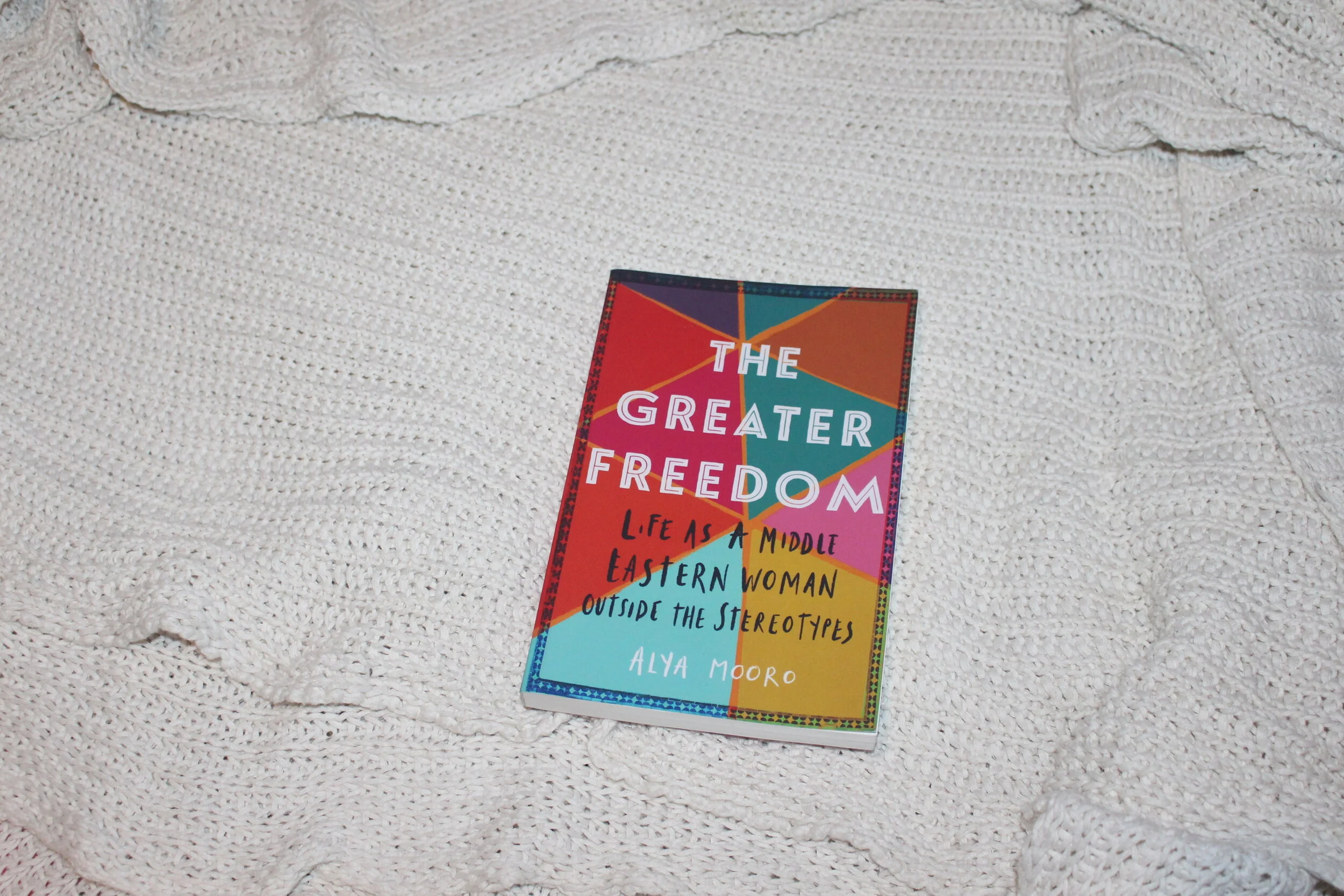
The Greater Freedom: Life As A Middle Eastern Woman Outside The Stereotypes
I’m not a newbie to the Arab world, I spend a lot of my time out in Tunisia with close friends who at this point have become family, so I wasn’t shocked by some of the examples that came up because I’d been shocked years ago when I first learned about them and I have simply adjusted to them. Don’t get it twisted, some I don’t agree with, and many I have questioned

Alya Mooro
Genre: Non-Fiction
Publisher: Little a
Watch The Breakdown
The Greater Freedom- Life As A Middle Eastern Woman Outside The Stereotypes, is part memoir and part social exploration into the Middle Eastern society. Written by an Egyptian-born and London raised journalist. Let’s keep it all the way a hundred the Middle Eastern society gets a lot of news coverage on topics such as terrorism, extremism and oppression. Voice’s like Alya’s are powerful in ripping up stereotypes and making you challenge even yourself on unconscious prejudice thoughts.
Taboo subjects are covered and addressed throughout the book, with chapter titles breaking down the topic: When you learn how you’re supposed to look, When you’re supposed to be with an Arab, and When you’re not supposed to like sex. You get insider thoughts, feelings and experiences of a culture that like others is coloured in stereotypes. A real honest and personal account of the author’s experiences, and through research and loads of interviews, those of various other Middle Eastern women navigating their way through this thing we call life.
“Alya Mooro grew up between two cultures and felt a pull from both. Where could she turn for advice and inspiration when it seemed there was nobody else like her? Today, Mooro is determined to explore and explode the myth that she must identify either as ‘Western’ or as one of almost 400 million other ‘Arabs’ across the Middle East.”
Is that how you’re feeling yeah
This book was an easy and flowing read and I enjoyed the book. You could get away with calling it an autobiography, as, at the heart of the book, it’s about the author’s experiences. Keep that in your mind, if not it’s easy to think that some narratives have been completely overlooked.
The book is simplistic in the way that someone who has no Middle Eastern friends can learn and on the other end someone with a lot of Middle Eastern friends can feel at home in the book and still pick up some things.
The chapter breakdown itself is a good talking point starter. The content is written in a way that speaks to those who connect through experiences, those who need to see facts and figures and also the bibliography kings and queens out there. It’s clear that it’s written by someone who works in the media world, not good or bad, but an observation.
I’m not a newbie to the Arab world. I spend a lot of my time out in Tunisia with close friends who at this point have become family, so I wasn’t shocked by some of the examples that came up because I’d been shocked years ago when I first learned about them. For the most part, I’ve adjusted to them. Don’t get it twisted though, some I don’t agree with, and many I have questioned which has resulted in really interesting conversations with friends. We don’t do this enough, asking questions. I don’t know if it’s out of fear, being too “British”, or maybe being bland and not inquisitive, I don’t know… but I think it’s important to ask questions.
In this 2019-2020 “funny tolerance” world, Alya could have thrown out all the amazing things about being Arab and her experiences, playing it safe and ending it there but she didn’t. She was real, raw and nothing was held back. I truly got the good, the bad and the ugly and ultimately that’s what was memorable! This book is all about learning about a culture and society from an insider - Not someone who had dipped into it, a scholar, or an observer. A real, this is and has been my life narrative. Her efforts are admirable and as Toni Morrison famously said: “If there's a book that you want to read, but it hasn't been written yet, then you must write it.”
One thing I did take away from the book is how liberal my close friend’s family are compared to many Arab families, similar to the author Alya’s immediate family.
It hit me when
One of the women interviewed talked about authority and how until you were married you were under the authority of your father. And then when you got married, you were effectively swapping your father’s rules to the rules of your husband and it left me with chills. I’m not naive, this is not a Middle Eastern specific issue, but to read how often more than not this was the case threw up all types of red flags in my vision.
“Ultimately, my dad allowing me to be myself is what allows me to be myself. That is a humbling realisation. That even where I am free to live by my life by my own rules, it was still a man - still my father - who was the gatekeeper to my freedom.”
3 Interesting Facts From the Book
In Egypt, if a man has sex with a prostitute and gets caught, the woman is put on trial and the man has to testify against her. The woman is then imprisoned.
Divorced mothers in Jordan are not allowed to remarry and must be judged to be trustworthy and ‘able to perform their duties’
In Saudi Arabia, women throwing parties to celebrate divorces are on the rise.
True stories
One topic that came up constantly throughout the book is the power and hold of opinions of those in the community. The judgement and fear of it. Since our friendship started back in 2012/2013 I’ve always invited my homegirl Rah to visit England as a holiday and stay with me. She always said “inshallah” but I realised over time that it probably wasn’t going to happen.
In about 2015/2016 her parents greenlit the trip, and to be honest, it was all a bit of a blur. One conversation I always remember though was Rah telling me that her parents hadn’t mentioned the trip to family or friends, as opinions from the family would put a stop to her coming. And there was me jumping back and forth between Tunisia and England without any parental consent or input.
“Friends are like extended family and you always feel welcome in their houses and their parents are so generous”
The above quote reminded me of a memory. Summer 2016 I had been invited to a wedding in Tunisia. I sorted out my outfits in England and then flew to Tunisia. As soon as Rah and her mum picked me up Rah’s mum was on a mission to get to the tailors. I wanted to catch a nap, but I got dragged along for the outing. Rah was getting some moderations to a dress, and I was just trying to stay awake. Anyway, Mumma signals for me to go to the tailor and I’m baffled.
Turns out Mumma had bought me, Rah and her sister Rym matching material in different colours to get dresses custom made for the wedding. For her “3 daughters,” she said. Yoo, I felt so loved. There are countless times I’ve been made to feel like a family member out in Tunisia.
Seasoning Level
CO2 | Salt | Pepper | Mixed Herbs | All Purpose Seasoning
Big Quote
“To be free, we first have to be able to name our constraints and the ways we are held back from exploring our identities and from expressing our truest selves”
Before you open this book take out your phone or a notebook and write down what comes to your mind when you think of Arab women. It’s not a test or a trick, it’s just for you. Then read the book and come back to your initial thoughts, and reflect on them.

Back to Black
Back To Black is a really blunt, taking no prisoners, educational book. Did I enjoy reading it? Hmm, as a kid I didn’t enjoy having to eat an orange when I wanted to yam down a pack of Chewit sweets but it was beneficial and I’m thankful I did.

By Kehinde Andrews
Genre: Non-Fiction
Publisher: Zed Books
*Gifted*
Watch the Breakdown
This book is a real home schooling, exploring the history of black radical politics, and breaking down how things such as Marxism tie in with the Black Panther Party. Plus it breaks down the differences between things such as narrow and cultural nationalism and pan-Africanism. The book gives a real in-depth exploration and critique of movements in the UK and US throughout the 21st century and aims to provide a blueprint to make a significant change.
“Black radicalism is one of the most optimistic politics that exists. While recognising the totality of oppression that Black people face, it refuses to lose faith that the problem of racism can be solved.”
Is that how you’re feeling yeah
Back To Black is a real blunt, taking no prisoners, educational book. Did I enjoy reading it? Hmm, as a kid I didn’t enjoy having to eat an orange when I wanted to yam down a pack of Chewit sweets but it was beneficial and I’m thankful I did. If you finish this book and haven’t come out with notes and research points then you haven’t read it properly. I had so many notes that I lost some. Seriously I was a mess, running around with pieces of paper.
This book is without doubt an uncompromising and very in-depth look over black movements and politics throughout the 21st century. When reading it it’s very clear how well structured it is and researched. Forreal forreal I think it’ll go over a lot of peoples heads though. Many people like to hear how things can change but do they really want to be in the work, hmm not overly! As Kehinde mentioned, to achieve a whole override of the system, it’ll require bold sacrafices from many and that is where the eyebrows start dancing and people say “hmm, yeah about that.”
“History suggests that once people are doing better they are less likely to revolt against a system they are making gains in”
Kehinde’s book reminds me of my pups and his advice (that I’ve never directly asked for)… It’s always right and nessecary but it takes a while for me to absorb the full power of the message.
I will say though, since I’ve read this book I’ve found myself more able to engage in political conversations and I’ve been recommending the book to people without even trying to, so it’s clearly unconciously left a mark on me. Because it’s written in a very academic tone, if you’re not a big time reader or academic I can see it being a struggle to read the whole book, even though you could very well share the same views.
It was real interesting to read from a critical point of view the ideas and movements of key black figures like Marcus Garvey, Martin Luther King, Malcolm X.
A niggling thought... I’m like Frizzy don’t say it, dont be petty, but here it goes. The book is about black people and black radicalism so I feel conflicted as to why I’m seeing Russell Brand's quote and opinion of the book featured on the cover. Full honesty, though I did first hear about Kehinde Andrew on Russell Brand's podcast. A friend recommended I listen to that specfic episode.
“The Field Negro is authentic because they embrace the politics of revolution, whilst the House Negro ‘is out of his mind’ because they are committed to the system that is oppressing them.”
It Hit me when
The whole book hits me. I have learned new things in every chapter, or at the very minimum deepened my understanding of certain topics.
The topic of respectability politics stands out. It’s the notion of black people needing to act in a certain way. A good example would be Rosa Parks Vs Claudette Colvin. Everyone knows Rosa Parks, but how many people know of Claudette?
Nine months before Rosa, fifteen year old Claudette refused to give up her seat for a white person, but was pregnant. She was “too much the stereotype” to be seen as the first or fully supported by her peers.
This happens so often in the workplace up to now. I’ve been in situations and witnessed others being told that they can’t be too loud, too opinionated or showcase any of the stereotypes that follow black people. You’re expected to act deserving that you’re in mainstream/white spaces.
Length
331 pages and that includes the bibliography/ source notes and also index pages. It took me 2 months to read the book. Inna real life, I had to read pages, then re-read them and then sip on my peppermint tea to digest.
“There was little pretence of equality in the West; until 1965 it was legal to discriminate on grounds of race in Britain.”
Seasoning Level
All purpose seasoned. This book is really mentally stimulating, them rewarding big brain workouts there. I’ve got a lot of time for Kehinde Andrews. He’s unapologetic, he loves his people and is committed to enlightening us. He wants to see black people in a better place.
The Big Quote
“We can only judge our success by how far we have improved the condition of the black nation. Calling yourself an African, wearing Kente cloth and celebrating Kwanzaa is a lifestyle choice not an achievement”
*Gifted by Zed Books in partnership with Black British Bloggers
My Name Is Why
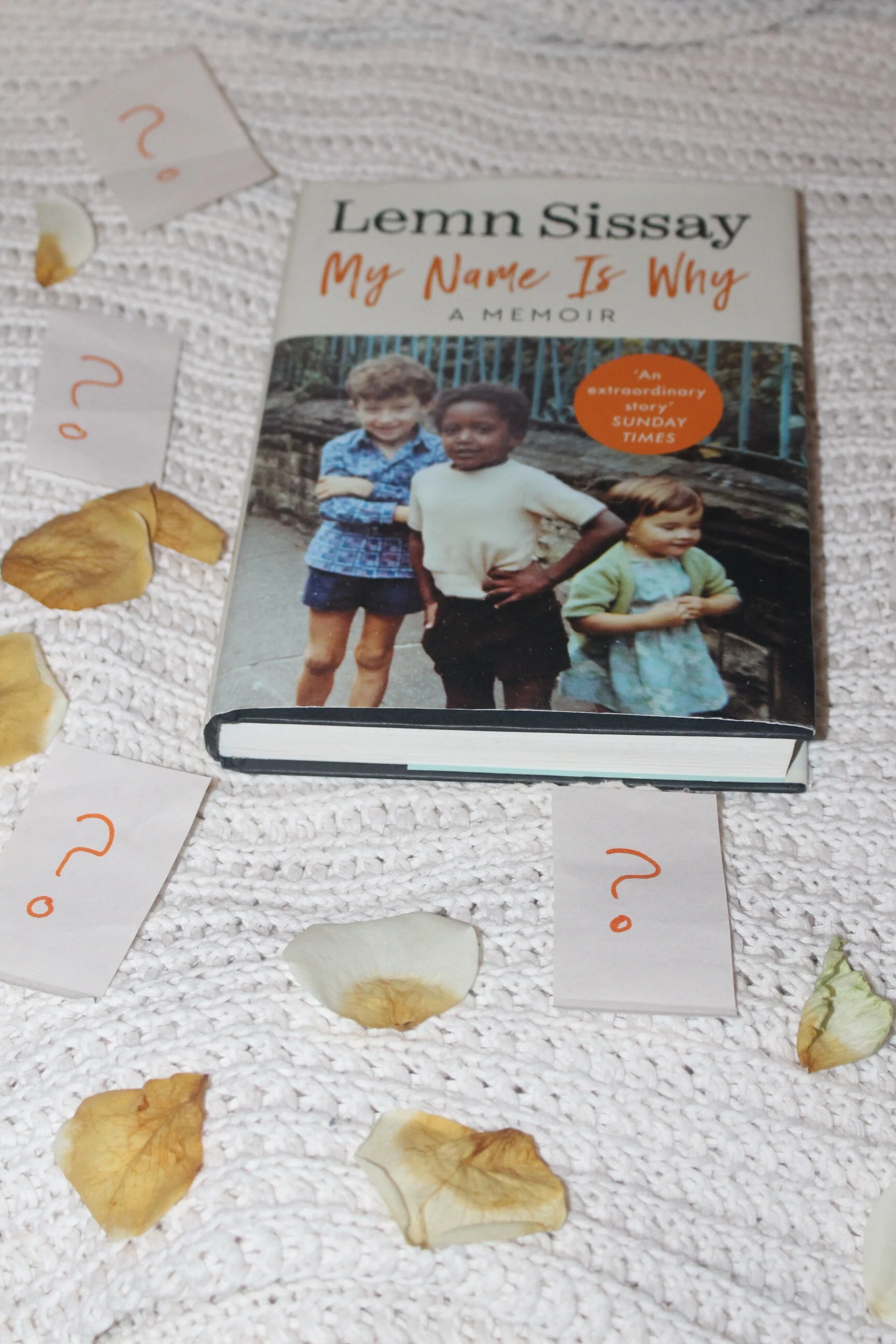
Memoirs are supposed to be personal and you’re supposed to learn from them. So tick tick, but… I think Lemn’s memoir is that bit more special because he puts his signature all over the book. I mean he’s not just a writer but also a poet he has a way of rising the perfect mixture of emotion out of you

By Lemn Sissay
Genre: Non-Fiction
Publisher: Canongate
*Gifted*
Watch the Breakdown
My Name is Why is a memoir that explores author Lemn Sissay’s experience of spending his childhood in the British care system. Bulked up with Lemn’s childhood worth of social services documents you get to read first hand the dealings of an institutional care system and also open up yourself to question such as what is the meaning of home and family?
At the age of 17 Lemn Sissay was given his birth certificate and found out that only name and identity he had known his life, ‘Norman Greenwood’ wasn’t actually his birth name. (As a teenager he tattooed the initials N.G on his hand.) At birth he had been named Lemn Sissay, by his mother who was Ethiopian. He then discovered that his mother had been pleading for him to be returned to her after social services took him away from her when they were living in a home for unmarried women.
Lemn spent his whole childhood in the care system, initially with a foster family for the first 11 years, and then was ejected into a foster homes for the last 6 years after his relationship with the the only family he ever knew broke down.
It sounds like the plot of a thriller movie but it’s real life. It’s his real experience.
“I work in rain said the storm
Thunder broke his heart
I woke in light said dawn
And spun the sun in the dark”
Is that how you’re feeling yeah
Memoirs are supposed to be personal and you’re supposed to learn from them. So tick tick, but Lemn’s memoir is that bit more special because he puts his signature all over the book. I mean he’s not just a writer but also a poet who has a way of raising the perfect mixture of emotion out of you; some annoyance, disappointment, but not to the point that you want to put the book down and stop being curious to know more about his life. This writing thing is his speciality, and I’m especially a fan of each chapter starting with a short poem. The memoir flows throughout.
When I read this book I felt like it was a major release. For anyone who has gone through the care system, on one hand it could be triggering, but the greater good is that things have been said and shown that should warrant a look into the current care system and clear failings.
I feel like I just want to have a really quick word with the family that fostered Lemn though to be able to move forward, around the corner. Especially that Mrs Greenwood! She really vexxed me! How are you going to promise someone a forever home and then throw them out when you’re over it. I think how that played out was cruel.
“She says Norman is a naughty boy, and that she sometimes thinks he is ‘amoral’. ”
It Hit me when
Two things throughout the memoir really hit me. The first was reading reports from social workers interactions with people who should have been nurturing Lemn. Grown-ass people that were moving absolutely out of this world and should have known better from a professional commitment but also on a deeper moral level.
The second was when I read about Lemn’s time in his final placement before he went to live independently. It was in a facility called Woodend, a remand centre- he should have never of been there. The letters written in response to a post Lemn had written about Woodend were hard to read with people sharing their own personal experiences of their time there.
I met Lemn Sissay at a charity event in 2017. Whispers this* I had no clue who he was at this time*, but I remember being captivated by his keynote speech about a project he was so fond of. I remember his passion when he discussed The Gold from the Stone Foundation which he had set up, and hosts Christmas dinners around the UK for care leavers. Bringing people together so they don’t feel alone over the holidays.
“Spoke to Mr Graves several times on the phone and eventually visited the school. He felt that Norman’s successes were too many for Chris to cope with. Went on to talk about another placement for Norman- without any consideration of how the boy might feel. I put it to him that it was the only home the boy had known.”
Length
193 pages. It was the perfect length, because I wasn’t waiting for it to finish. Neither did I feel like I’d been finessed and missed out on information.
Seasoning Level
CO2 | Salt | Pepper | Mixed Herbs | All Purpose Seasoning
The book was all-purpose seasoned. A definite read. Lemn Sissay MBE, yes put some respeck on his name and add them last 3 letters. Lemn Sissay is an award-winning writer, poet, playwright, artist and broadcaster. As much as you read this book and are in shock (or not) at how this young black child was dragged through a problematic system and feel angry at the injustices he has faced, you can’t help but smile when you realise who this man grew up to be. Stories like Lemn’s show the strength of resilience, and why believing in your sauce is so important.
The Big Quote
“‘I do this job because I love children.’ In all my time in the children’s home they never said, ‘I’m in this job because I love you’. I was becoming invisible.”
*Gifted by Canongate Books
Frizzy

The Ungrateful Refugee
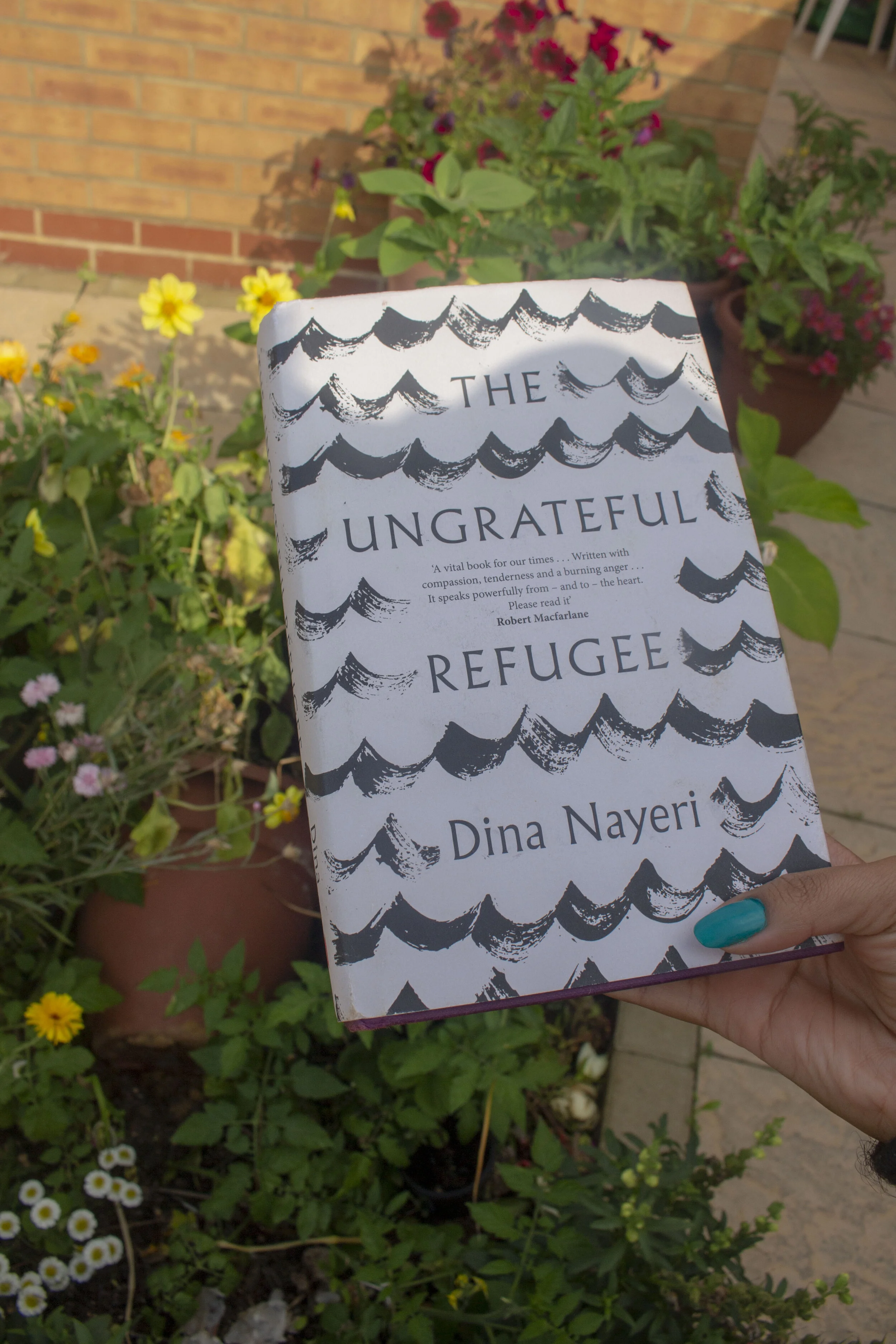
Part memoir, part reconstruction, this non-fiction book written by author Dina Nayeri serves as a compassionate and unforgettable reminder that refugees are more than a statistic and number.
By Dina Nayeri
Book Review Genre: Non-fiction
Publisher: Canongate
What is it like to be a refugee? It is a question many of us do not give much thought, yet there are more than 25 million refugees in the world. To be a refugee is to grapple with your place in society, attempting to reconcile the life you have known with a new, unfamiliar home. All this while bearing the burden of gratitude in your host nation: the expectation that you should be forever thankful for the space you have been allowed. *Taken directly from the book*
Watch The Breakdown
Part memoir, part reconstruction, this non-fiction book serves as a compassionate and unforgettable reminder that refugees are more than a statistic and number. Dina brings in her own personal experiences of having to leave her homeland of Iran at the age of 8, as well as combining stories of others who have become refugees and asylum seekers in the recent years.
You discover the stories of those who were thriving in their careers whilst in their home countries and now cannot work. Those who are determind to stay close to their cultural identity and do so through food. And those who cannot bring themselves to go into the harrowing levels of details the authorities demand when presenting cases for seeking asylum.
Through these real-life stories, it forces the reader to explore their conscious opinions about refugees and challenge the fear-mongering and anti-immigrant positions that many countries have adopted. This book is really important. You need to read it.
Seasoning Level
CO2 | Salt | Pepper | Mixed Herbs | All Purpose Seasoning
Chapters Overview
The book is well structured and breaks the insights it gives into the lives of refugees into five core parts.
Part 1 covers in vivid details the action and risky process of escaping and leaving a country. You get a real sense of life for people in their homelands before and whilst they had to make life-saving and changing decisions.
Part 2 details the process of waiting and being allocated camps and temporary facilities. Dina visits one of the temporary accommodation that she was placed in recounting her experience there and the stories of daily life within those walls.
Part 3 explores the asylum process -The rejection letters and the asylum grantings that effectively helped many to reset their lives. A major topic of interest in this chapter is learning through various people's experience, as well as professionals, how the truth is interpreted and understood in different countries.
Part 4 is all about assimilation, and the expectations and assumptions of becoming the nation that adopted you.
Part 5 is titled cultural repatriation. It ends the book showing the different ways within the author's family, that cultural identity and belonging can show itself.
All the content of the book hit me really hard. But, the discussion between Dina and her baba/dad right at the end of the book caught me off guard. I found myself being really judgemental and feeling heated at his request for Dina to help her half-sister, who wanted to become an unaccompanied minor and refugee. Other than me thinking it was irresponsible and risky, I also felt that he had undermined and belittled the experience that Dina, her mum and brother had gone through.
At first when reading the book I was sure that certain parts I'd read before elsewhere and felt frustrated, and then it hit me. I'd read Dina's previous book 'Refuge' and the bits that I felt were repetitive were from the 'Refuge' book and in fact details are taken from her life.
I usually write notes as I read through a book, but I couldn't bring myself to when reading this book. This book will forever stay on my bookshelf, no swapsies or lending out for real. I had to close the book and pick another activity to do many times because the raw details of what many had gone through stirred up so many emotions for me. If it could do that for me, a reader, imagine what it felt like for those who were going through it.
Length
370 pages. It's not a book that you can read really quickly. It gives you a feeling of heartache so you have to slow down and really digest everything.
Big Quote
"Why do we ask the desperate to strip away their dignity for the price of our help?"
My name is not refugee Podcast Episode
After being so moved by the book I called a family meeting and asked my mum and Ga'mama if we could talk about their experiences as refugees in the 80s coming to the UK. It also happened to be World Refugee Day and I've written about it. My Ga'mama was initially uncomfortable about recording, and thought she couldn't add much to the conversation, but warmed up and wouldn't stop talking after. You can listen to the discussion here
Frizzy

"I Will Not Be Erased"
What felt amazing when reading the stories was that even if a story did not resonate with me much I respected it being there getting recognition in a published book. The variety of stories were spot on and I was shocked by some of the stories that were in the collection.
By Gal-dem
Genre: Non-fiction, Identity, YA
Publisher: Walkers Books
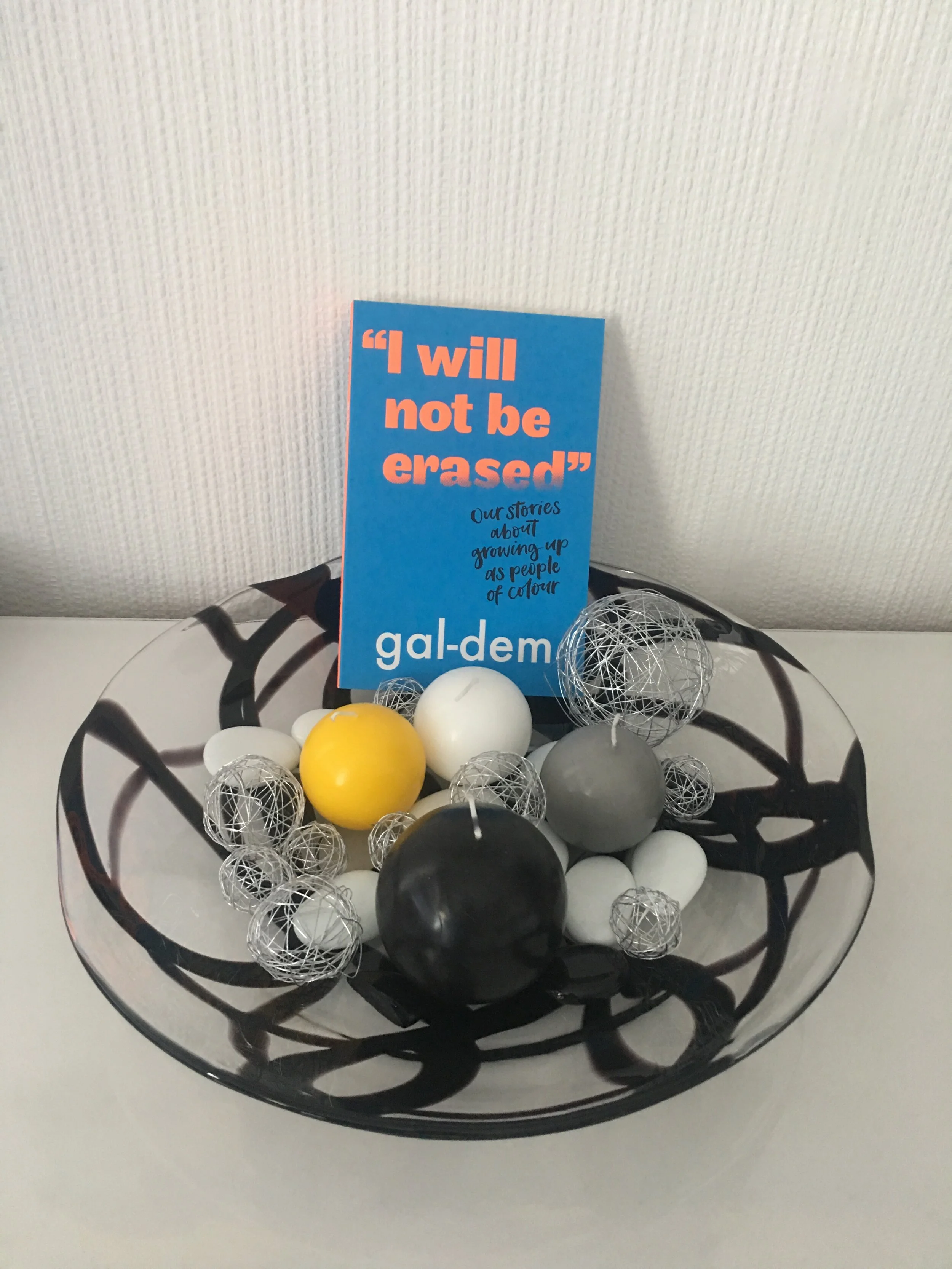
"I Will Not Be Erased" is a collection of 14 stories detailing the upbringing of people of colour by Gal-Dem. Gal-Dem is a UK media publication founded in 2015 by Liv Little. The online and print magazine is written by women of colour and non-binary people of colour addressing inequality and misrepresentation in the industry. Basically, Gal-Dem is the shizz-nai-eee (no flies around).
I've always adored how Gal-Dem target a specific target audience, and within that audience cover just about everything. It's easy to have a niche and target, let's say only the Asian girl who lives in London but Gal-Dem has always strived to represent fairly. It's so refreshing to read articles written by people of colour without the focus being solely on their race.
Seasoning Level
CO2 | Salt | Pepper | Mixed Herbs | All Purpose Seasoning
Breakdown
The irony of the book title is that it was a complete nightmare locating this book when I went looking for it in my local bookstore because they housed it in the Young Adult Fiction section. Note to stores, there is nothing fictitious about this book and I should have seen it on the tables at the front of the store. PERIODT.
The stories share a key theme, taking inspiration from something each contributor had written whilst growing up. The manner in which the stories were told was very transparent, and naturally, some parts spoke out to me more than others.
What felt amazing when reading the stories was that even if a story did not resonate with me much I respected it being there getting recognition in a published book. The variety of stories were spot on and I was shocked by some of the stories that were in the collection. Shocked in the sense that some of these topics were things I'd seen talked about amongst a select few trusted people but never mainstream. Talking with zero frills in the following titles "My Virginity and my choice: Dating as a British Muslim" and "From Nightclub to A & E: A Tale about Drugs."
What separates this book from others is that they were not afraid to discuss and enlighten the younger generation about "taboo" subjects. They've skipped the part about caring if people agree with the actions of some and have laid things out on the table covering all realistic angles. A real testament to breaking barriers and encouraging others to speak their truth.
Favourite story
My favourite segment is the second story "It's Pom-Mang-Granate: Be proud of what makes your story different." The author explores her teenager self, feeling embarrassed and annoyed by her parent's Sri Lankan ways and failures to assimilate in a new country with the "perfect vocab". I sat down with my mum and spoke about this topic and we laughed endlessly throwing back and forth words that my mum has either refused or given up on attempting to say in English.
This story took readers on a journey, which didn't feel superficial in any way. For people with British parents, it may have been another funny story but after finishing that section I put the book down and reflected. It made me reflect on how I viewed my mum being "different" growing up, with a strong accent and non-British ways. And like the author, now that I am older I know how immensely grateful I am to have a parent so strongly into their culture, who can pass down recipes and the richness from their country.
Length
207 pages. The individual stories were a good length roughly 11-12 pages each, not too long for the message to get forgotten but long enough to leave an impact.
Who should read it
Mid-teenagers to young women and non-binary people of colour would be the primary benefactors. However, on a wider scale, this book offers a peak into a different lifestyle to those who are not in the primary audience.
3 things I've taken from the book
That anyone can be the rainbow to someone's rain, by genuinely accepting people as their authentic self.
That I need to spend more time with my mum and Ga'mama and learn more about their homeland.
That I need to step out of my comfort zone more because I too have a story to tell.
A letter to my younger self
Inspired by those who spoke their truth in the book I've scribbled out a letter to myself. I immediately thought of 3 topics but one won. "I'll let you get away with it because true say you're a lightie" and " No, my mum isn't from here."I decided to go with...
"I wasn't sure if you was Black until when you started speaking."
Dear fourteen year old me,
I know you think this is a super compliment because you hate having to explain that no you're not mix raced, and yes your dad is black but no your mum isn't white, but it's not actually meant in a positive way.
You'll learn to understand as you get older what people really mean when they say you "sound black." Not because, you are woke or know all your Black history and the likes of Mary Seacole, Martin Luther King and Malcolm X, but because of your personality and the way that you talk.
Even though you think you look unquestionably Black many will keep seeing you as racially ambiguous. The ambiguity will disappear as it becomes clear that your traits are what society have and will label as a stereotypical "Angry Black Woman." You're on the loud side, non-conforming and unapologetic in questioning and calling out B.S. All the things that people like your dad have always said made you inquisitive, authority figures, particularly at school, will label as problematic.
Spoiler alert. You'll get kicked out of the "good old Catholic school" but it will not ruin your life. Even though you will have to pretend to your Ga'mama for a year that you still attend that school so your mum doesn't disappoint her. Don't worry in your 20s all will be forgiven and your mum and Ga'mama will brag to their friends about your University degrees even though your mum will keep telling people about the business degree you earned. News flash no you didn't study business. You'll eventually get into a school bursting with diversity, with people from different faiths and ethnicities. And better yet you'll meet 2 of your closest girls at that school and become an aunt to their children!
Now that I've got your full attention I'm saying this with love and no judgment I promise. Please be nicer to your fellow black girls who are well spoken and more reserved, it doesn't make them any less black. I know that popular belief is black people with those two features equals wanting to be white but it's not true. You'll understand as you get older how flawed and oppressive those views are.
I'm sorry to say that even in your 20s you'll still have people that don't view you as being black enough, there will be jibes online and shade thrown. *Boo bring the sun I got your back* I'll keep it all the way real with you though, you will be sad sometimes and cry but you'll also remember that being black does not have a colour chart and you will immerse yourself into your heritage so much that it won't matter what others say. Plus you'll keep using all the boombastic slang that you grew up with. And you'll learn to switch it up when you need to. Honestly, you should really add that to your CV because that right there will be a really useful skill.
Love you always, especially through the hard times.
Frizzy

Stories for South Asian Super Girls
This book for me is a continuous circle of what I call putting a sister on! From educating us about the past supergirls to shining the light on the current ones, to leading the way for the future ones.

By Raj Kaur Khaira
Genre: Children’s book, Biographies
Publisher: Kashi House
This collection includes 50 biographies of influential South Asian women. It covers countries such as India, Pakistan, Nepal, Bangladesh and Afghanistan.
Representation matters so much and this book here is so important for all the young South Asian girls. Actually no it's important for all young girls. But especially South Asian girls to see what the women that look like them have achieved. There is so much to be learned from these 50 admirable women. The author, the illustrators and all the women mentioned in the book have South Asian heritage, it's refreshing to see everything being kept in the community!
A close friend of mine is South Asian, with family from both India and Sri Lanka, and she often communicates her frustration of the lack of representation of her community. And in particular how the women are viewed as feeble and timid.
Initial Thoughts
As soon as I unwrapped the book I noticed the bright colours on the cover and the inner cover filled with powerful descriptions.
Instinctive | Protector | Creative | Resilient | Savvy
The illustration on the contents page looks so crisp. I immediately recognised some of the women. Well, about 6...
Mindy Kaling - Actress (wrinkle of time)
Rupi Kaur - Poet
Farrah Storr - Editor of Cosmopolitan UK
Nadiya Hussain - Great British Bake Off
Jameela Jamil - Model/Presenter
M.I.A - Singer/Songwriter/Activist
In the introduction, the author Raj reiterated my friend's feelings, of how she feels the women she has descended from have been portrayed. I was excited to turn over the page because I had a strong feeling that if "I didn't know, I'd get to know!"

After Thoughts
I thought that the illustrations of each woman were so beautiful and complimented each piece. The art was honestly on a whole different level. I liked how each super girl mentioned was illustrated by someone different, giving a chance for various illustrators to get involved and the artist's names were written on each piece getting their credits. Also, I loved the mini-interviews with illustrators and that all their social media handles were included. This book for me is a continuous circle of what I call putting a sister on! From educating us about the past supergirls to shining the light on the current ones, to leading the way for the future ones. I liked that there was a variety of ages and that the locations of the women chosen ranged from being in the South Asian region to around the world.
Being only a 2 page spread I needed to go away and do research into the women I was not familiar with because I was left wanting to know more about them. But I learned a lot from this book. Sophia Duleep-Singh was an absolute rebel with a mighty cause, Noor Jahan "wore the trousers" in an era when women's only option was to wear skirts and Aanchal Malhotra is making sure historical events will never be forgotten. I found myself with each page turned in awe of these amazing women.
After reading the book I realised that it is, in fact, a children's book which now makes perfect sense and explains the word format. I can definitely see this being a regular bedtime book, with each day being dedicated to a different super girl. This book is also interactive, including activities to really drive home that the reader is also a super girl. I even saw space for the reader to draw a picture of themselves.
Based on the target audience this book couldn't be any better. It is beautiful, it is uplifting and all the proceeds from the sales are being donated to charities supporting women and children so definitely purchase one.
Frizzy

White Fragility: Why it's So Hard For White People to Talk About Racism
For someone like myself who sees things in black and white * no pun intended* it was beneficial to learn about the many shades of grey in between what I thought was so clear cut.

By Robin Diangelo
Genre: Non-fiction, Race, Sociology
Publisher: Penguin Books
Robin Diangelo, the author of this book, first invented the term “white fragility” in 2011. The term refers to a state of racial distress, a barrier of equality, aimed at maintaining racial dominance and ridding itself of any problems/inconvenience.
In DiAngelo's words, "Though white fragility is triggered by discomfort and anxiety, it is born of superiority and entitlement. White fragility is not a weakness per se. In fact, it is a powerful, means of white racial control and the protection of white advantage." The book breaks white fragility into different subcategories with each chapter explaining the underlying sociological phenomena. The author has a PhD in multicultural education and has been a race and social justice educator/trainer for 20 plus years.
Seasoning Level
CO2 | Salt | Pepper | Mixed Herbs | All Purpose Seasoning
The breakdown
The title doesn't lie, Robin Diangelo gets straight to the point of exploring what she describes as "white fragility" in the western world. There is no small stretches or warm-ups it jumps straight into a full-on long-distance run. The book is broken down into 12 chapters addressing how racism operates and the effects of it. Chapter 2 “Racism and white supremacy” is an interesting chapter and explains that race is a social construct. For me, part of chapter 2 (pgs 15-24), should appear nearer to the beginning of the book, I'm talking introduction chapter 1, because for someone who is not clued up about definitions of race, the social construct of a race, and the difference between prejudice and race waiting until page 15 could be a little too long.
Forreal Forreal
I appreciate this book though. I see it as a step in the right direction. I've read various books about race and identity. Mainly by Black females, and most recently "Brit- ish" by Afua Hirsch and "Why I'm no longer talking to white people about race" by Reni Eddo-Lodge, both equally important books sharing their experiences.
It was easy to read the book 'White Fragility' with an open mind because I was definitely intrigued to read about race and racism from a white person's viewpoint. The book layers historic events, moving quotes and unparalleled anecdotes to explain the here and now in society. I'd always found it puzzling that white people, with a limited number of exceptions, have found it hard to talk about race and racism.
I remember a white colleague being on the phone to a black rights activist and he was stuttering on the phone in the lead up to mention the obvious when identifying the man as black. I later asked him why he stuttered and he admitted that he felt uncomfortable saying it. For the life of me, I couldn't understand why.
I'm a realist and whether people like it or not the facts from history have shown that in order to push for change you need others on board, especially those that benefit from the unequal dynamic. A prime example being the suffragettes. Ultimately men passed the law that saw some women granted voting rights.
The book is written from an American perspective, but reading as a British person the issues are pretty much symmetrical. However, some parts of the book might require you to pause and do a little background research. I'm clued up on the Civil Rights movement but have a little zero geographical knowledge on the US.
Favourite chapter
Definitely, chapter 5, "The Good/Bad binary" simply because I learned the most from it. This chapter addresses how racism has adapted in recent years and why it is thriving now. For someone like myself who sees things in black and white * no pun intended* it was beneficial to learn about the many shades of grey in between what I thought was so clear cut.
For example, many thinking of a racist person conjure up an image of the KKK. Diangelo paints the image that when people think of racism today they imagine the white nationalists in Charlottesville, USA. To be likened or engaged with those acts is to be seen as being a bad person. Therefore, avoiding the behaviour of that extreme somehow leaves you in the good person category. Another strong part of the chapter is it discusses popular “colour- blind” statements used by many white people, breaking it right down to the core explaining how damaging and ignorant they are. After every statement, I found myself rolling my eyes and depicting each time this had happened to me.
“Focusing on race is what divides us” I also learned a new term called "colour-celebrate". I was familiar with the examples used but had never heard this specific term. I call this the Monopoly get outta jail failed card term. It is recycled so often and generically used when someone is pulled up on prejudice and/or racist comment. I present to you my favourite one. But... "I have people of colour in my family".
Yes, yes & yesss
The author putting her shortcomings out on the table, but also explaining the steps she had made to remedy the scenarios which I felt was extremely vital. In one particular scenario, Diangelo describes a joke she made about a colleague, during a work meeting when talking to her colleagues and a newly hired staff member. She told them “The white colleagues were scared by Deborah’s hair.” Deborah was a black woman with dreadlocks. And the new staff member, in particular, was left feeling really uncomfortable with the comment. She reached out to the person who was offended and listened to what had caused the offence and took steps to further her knowledge so she would not be in a situation like that again. People relate to others who are honest about their journey and the author admits that she is still on a journey.
The book also includes a large catalogue of research and study findings. The bibliography contains so much information for those that want to continue learning and reading about race and cultural experiences as well as past studies.
It hit me when
The book brought up a memory for me that I'd really tried to brush away. I remember going for an interview for an internship and feeling really positive. I had my hair combed out in a big afro and I felt proud. In the past, I tried to tame my hair in professional settings, but I left my house on this particular day feeling empowered. I met the person interviewing me, a white person, and I was really nervous. I experience intense social anxiety but I was also nervous because as it was my first potential work experience after studying. The interview went well, well at least I got the opportunity. But I remember feeling quite ashamed of myself.
About fifteen minutes after I met the person they asked if they could speak freely. I thought it was a positive sign and welcomed them to. I was told that when the person first met me I came across as having an attitude like I was giving them "my time and not the other way round". I'll never know for sure why but it never sat right by me. Reading this book and remembering my inner conflict when I got the role triggered me, making me feel very awkward. I would love to have gone back and questioned the person to make them spell out what exactly it was that gave me the attitude.
Length
168 pages including the bibliography and notes. The book was a little too long for me, mainly because more often than not things that were mentioned I was very familiar with, but I am also very aware that I'm not the target audience for this book. I'd recommend reading it chapter by chapter, as you need to read each chapter and then absorb all the information as it's not a light-hearted and fluffy sort of book.
Who should read it
Everyone... everyone can take something from this book. Anyone who is invested in society changing and moving forward in the name of equity. I would love to see this on the syllabus in the UK.
But especially those...
Who refuse to discuss race because it makes them feel uncomfortable being in a conversation that could result in them "being blamed for what their ancestors did" (I'm not kidding I've heard this wayyy too many times)
Ouuuu…
And those who comment under job postings that are aimed at encouraging diversity in workplaces, with the complaint that "the only people being hired these days for roles are people of colour".
You can't buy these EXAMPLES
So, I was out in public reading this book. A man peered over to view my book title, a white man. After he read the title he proceeded to let me know I was "scum" and a "bitch." I smiled internally whilst I tried to figure out how I could send him a copy of the book.
The BIG quote
“But race is the child of racism, not the father”
Kind of cheating, as it's not the author's but it's so powerful. It took me so long to really digest this quote. My understanding and what I hope this book imparts with the reader is that the social construct of 'race' was created to create a divide and a hierarchy but being curious about race and talking about it does not make you racist.
Have you read the book? And do you think it is important to discuss race?